Building Connections through Customer Service

If your career involves a product or service in any way, you’re in the business customer service either directly or indirectly. To give the best customer service, it’s important to build a connection with the customer. As a career coach, if I can establish a bond or rapport with a client, they will be more motivated to listen to my advice. If there’s no connection they are less likely to be concerned with maintaining the cohesiveness of the working relationship.

Obviously, I don’t change my personality to match each client in order to build a rapport but I do my best to understand and identify with their needs. Understanding their background, emotions and attitudes can assist in tailoring techniques to that specific client. You have to make an emotional investment with others if you want to earn their business.

I’ve gone to a restaurant and had a meal that tasted average but I had exceptional customer service so I would go back to eat at that restaurant. But if I had the same meal and terrible customer service I wouldn’t consider going back. What’s the difference, it’s the kind of experience the customer walked away with.

A server that seems invested our experience, is pleasant, says something memorable or humorous, pays attention to small details, and is attentive to our needs can be to difference between a one-time customer and a repeat customer. People go out of their way to boast about receiving outstanding service and will refer your business to their family and friends. Use superior customer service as a way to build connections with your repeat customers and you can create a network that can boost your career or business to a higher level.
Networking with a Twist

I recently attended a networking event that had an interesting approach, speed networking. Similar to speed dating each person gets thirty seconds to share their elevator pitch with each person about what they do and see if there’s potential to make a business connection and then move to the next person in the line.  What I liked about this was that I got a chance to network with everyone at the event in a short period of time without getting trapped in a conversation with people that I didn’t share a connection with. There were also some tips shared at this event that I found to be valuable.

  • Create a concise elevator pitch, thirty seconds or less that shares what you do in an engaging way and targets how what you do can benefit the person who’s listening.
  • Recruit people to help share your message with their network and pay them a referral fee to bring you customers.
  • Learn what your target demo graph is for your product or service and what their needs are so you don’t waist time pursuing the wrong leads.
  • When you’re networking find out what the other person’s need are and see if there are areas where you can collaborate and help one another.
  • Learn how to target your message to groups and start speaking at different organizations that would be interested in your service to expand your potential customer base.

Finally, when all else fails start your own networking group that meets at least once a month. Invite two or three friends and ask them to invite two or three friends. Find out what each persons needs are and how you can help each other. Also during your meeting share valuable content that would be helpful to the members of your group.

Being Open to Making New Connections

As humans it is our nature to judge others based on outwards appearances. We tend to gauge a person’s social status by the clothes they wear, body shape, and attractiveness which can lead us to favor some people over others. The evidence from our culture overwhelmingly supports the notion that initially we respond more favorably to those we perceive more physically attractive than to those we see as unattractive.

I would like to challenge this mind-set to say that the connection you’re looking for may not look like you expect. I have a family member that from the outward appearance doesn’t have her life together but one day while we were talking, she had an in-law drop by the house and he had a business connection for my husband. I learned from this experience you never know who can give you the connection you need and not to make preconceived judgements about who people may know that can grow your career. It may not be a good idea to share your goals with everyone but for those people you trust, it could be beneficial to see what connections in your career field they might have even if by outward appearance you think they wouldn’t have the right connection.

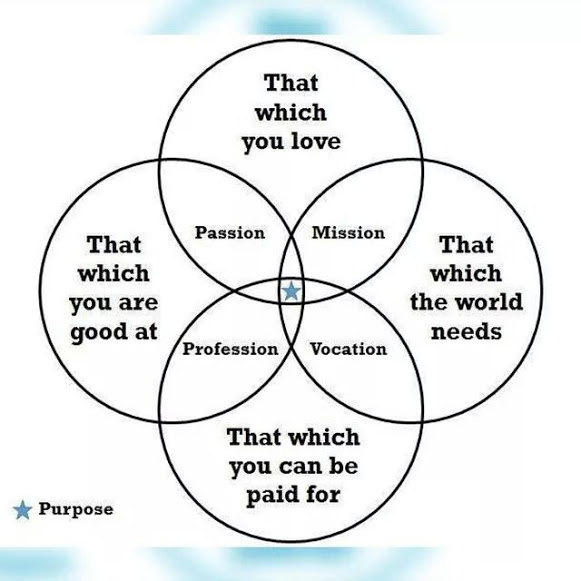
In the Zone, Finding your Sweet Spot.

purpose pic

Before you begin networking to get connections, you should be sure you’ve discovered your true purpose. I often hear the question, “How can I be sure that I know what my purpose is?” Here’s some questions you can ask that can help you figure it out.

Passion- What are the things I love to do? The subjects that I’m interested in and engage me the most?

Mission- What’s a problem in the world that needs a solution? The topics that I become outraged or empathetic about?

Vocation- What are the potential careers in this field that I can be paid for?

Profession- What is my skill set? What do I naturally do well that other people may not? What things do other people give me compliments on? What things do I get satisfaction out of doing and energizes me while I’m doing them?

Finding the area where these questions intersect (the inner circle) is your true purpose. Once you start networking in this area, you will start to operate from your sweet spot, aligning yourself with your purpose.

And the Winner Is…

Last week, October 5-11, 2014 was Mental Health Awareness Week. This was the perfect opportunity to create a twitter event to encourage others to tweet using the #JustSayHello hash-tag. The Just Say Hello campaign was created to help people make an effort to reconnect with someone they have lost touch with or engage in a conversation with a person they wouldn’t normally talk to. Intentionally making meaningful connections can reduce the silent epidemic of 60 million Americans that suffer from loneliness.

As an incentive to get people to participate in this twitter event, I partnered with the women’s empowerment non-profit, I Know Somebody Houston to give one woman 2 FREE Oprah’s Life You Want Weekend Tickets when she comes to the Toyota Center in Houston, TX October 17-18, 2014. There were some remarkable women that tweeted using the #JustSayHello hash-tag the dream they felt they could accomplish with the tools they would learn at this Oprah event focused on walking in your purpose.

It was so difficult to judge the entries because there are some women doing amazing work. The winner is Tracie Jae, she does introspective work with couples to help strengthen marriages. She’s looking for the tools from this conference to help her launch a seminar called “Would I Marry Me” to help people recognize and fix the brokenness within themselves so they can enter marriage whole. I’m so grateful to be able to give her this opportunity to get the missing link she needs to start walking in her purpose and create a more meaningful life for herself and others.

Free Oprah Ticket Giveaway Twitter Contest

Calling all women! Connect with your Calling and I Know Somebody Houston have joined to give one special lady a free Oprah Tickets! Learn how to find your purpose and activate the dream within you when Oprah’s The Life You Want Weekend comes to Toyota Center on Friday, October 17- Saturday, October 18, 2014. Oprah Winfrey’s hand-picked life trailblazers in Houston, TX include Iyanla Vanzant, Rob Bell, Elizabeth Gilbert, and Deepak Chopra.

Oprah’s The Life You Want Weekend Ticket Giveaway Twitter Contest is on Thursday, October 9, 2014 between 7:00pm-8:00pm CST. The Gift of Connection and the non-profit, I Know Somebody Houston are hosting this twitter event using the hash-tag #JustSayHello to promote mental health awareness week October 5-11, 2014. The #JustSayHello campaign encourages people make an effort to reconnect with someone they have lost touch with or engage in a conversation with a person they wouldn’t normally talk to. Intentionally making meaningful connections can reduce the silent epidemic of 60 million Americans that suffer from loneliness.

Being Mindful When Using Words as Linguistic Symbols

Linguistic symbols are used on a regular basis to give a positive or negative connotation to a particular subject in an attempt to shape public opinion. When you say the term “illegal alien” the first image that comes to mind is a foreigner that has entered the country illegally. If you say “undocumented worker” you think of a person who isn’t a U.S. citizen being exploited by companies that don’t want to pay the associated costs to hire U.S. citizens.

Another example of the use of linguistic symbols was during the economic collapse when all indicators predicted that the U.S. banking system would fail and therefore destroy the economy. The money given to banks to keep them afloat was called a “bailout”. After the outpouring of anger from the public the term was quickly changed to a “stimulus package” but the damage to the image of the program had already been done.

Particular words invoke emotion and with this in mind people can use linguistic symbols to create a positive emotion or misuse them to generate hateful emotions. Today we find many groups using and misusing linguistic symbols in dramatic ways on buttons, badges, bumper stickers-many of them emotion laden. When we’re networking with others we need to be aware when we hear people using linguistic symbols to garner a specific response and gauge if it’s being used for positive or negative motives. Also being mindful in our own use of linguistic symbols when we’re networking with others to have good intentions.

Connecting with Organizations

In a previous post, I explained that joining organizations that have connections you need can assist you in fulfilling your purpose. I also stressed that the primary reason for joining an organization should because of your passion for the cause of the group. There are numerous criteria to look for to see if a group is the right fit for you but for this post I’ll be focused on two additional standards you need to be aware of before joining an organization.

As human beings, according to Maslow’s hierarchy of needs, we have a primary need for love and belongingness. This means that all of us need to identify and belong to a group of people that have similar values to our own. Once you’ve determined that you’re passionate about a group’s cause, the next standard is to see if the organization’s core values match your values because in the process of joining a group we agree to subscribe and promote the core interests of that organization. This can also mean that we compromise some of our personal values to conform to the group.

The last criteria I’ll be discussing is the leadership of the organization. First and foremost, the leadership should display competency, respectfulness towards others and personal integrity. Does the leadership use manipulative techniques or empowerment to get membership cooperation? In order to keep unity and cohesiveness, an organization uses identification to strengthen the connection between its members and the organization. Leaders that use the technique of identifying with their members’ needs is more persuasive than using guilt. When you believe the leader shares your values, you’re more receptive to believing what they’re saying. If you see these qualities displayed within the organization, you’re on the right tract to finding a constructive connection with an organization.

The importance of building connections at the office.

I can recall when I briefly worked as a receptionist for a government contracting company. When I first starting working at this company there was a good rapport between me, my fellow employees and the management. A couple times a week a large group of the employees that enjoyed socializing with one another would go out to lunch together at a nearby restaurant. Several times they asked me to join them but I could not accept because at the time I was on a limited budget. As time passed, I began to notice that they didn’t make an attempt to socialize with me anymore in the office and the good rapport was fading.

It was not a surprise when I was let go from this position by a manager that implied that they wanted a receptionist that had a more “bubbly” personality. My job performance was fine but because I didn’t go out of my way to socialize with people, she felt that I didn’t have an outgoing attitude.

This experience is memorable because I learned that making an effort to create bonds even when it’s not convenient can impact your professional success. Trying to be too strict with my budget ended up costing me a job and making my financial situation worse. Reflecting back on this situation, I believe that I could have made more of an effort to connect with the group. After learning this lesson, at my next job I socialized with people that I had a natural rapport with occasionally outside of the office.

Mastering Nonverbal Communication while Networking

The way people see you, your competence, trustworthiness, and friendliness with them relates directly to your nonverbal communication. By both observing and demonstrating nonverbal communication people can grow and learn how to function together. Nonverbal communication can also convey dominance and territorial issues between people. Such moves range from staring, crowding, leaning, interrupting people, and overwhelming them with big gestures. If a person believes that they’re ineffective at networking, there could be several issues that hinder their message, nonverbal cues being one of them.

Nonverbal communication plays a large role in everyday communication, an important part of deciphering what someone means is using body language to read in between the lines. Since nonverbal communication messages can be unintentional, people can be unaware that their nonverbal cues at times contradict their verbal cues. If you agree but frown and turn away, your actions contradict your words. When this happens, people believe the nonverbal. When your body language creates an uncomfortable environment which will hinder communication, the other person may form a negative impression of you. Becoming aware and conveying welcoming body language will increase the likelihood of creating a positive impression while networking.